Summer Home Maintenance on Cape Cod: A Builder’s Checklist
Summer is when a Cape Cod house looks easiest to own. The heat is on, the windows are open, guests are coming and going, and most problems stay quiet until the first hard rain or the first cold night in September.
That is exactly why summer home maintenance on Cape Cod matters. Salt air, sun, wind, sandy soil, heavy humidity, and crowded project calendars all work on the house while everyone is focused on using it. A short builder's checklist in July can keep small maintenance issues from becoming fall repairs, and it can also tell you when a simple fix is really the first sign of a bigger renovation conversation.
Here is what we would look at first.
Start with water: roof, gutters, grading, and drainage
Most expensive home problems start as water problems. On Cape Cod, that water does not always show up as a dramatic leak. It shows up as damp trim, soft clapboards, staining around window heads, wet basement corners, or patio runoff moving toward the foundation instead of away from it.
Walk the outside of the house after a heavy summer rain and look for:
- Gutters overflowing or dumping water behind the fascia
- Downspouts discharging too close to the foundation
- Soil or mulch pitched toward the house
- Basement bulkheads with standing water nearby
- Low patio or walkway areas that hold water after the rest of the yard dries
- Moss or dark staining below roof valleys
If water is moving toward the house, fix that before you worry about finishes. Grading, gutter extensions, dry wells, and drainage work are not glamorous, but they protect everything else.
For homes that sit low, near wetlands, or close to the water table, drainage also affects future work. A future basement remodel, patio construction on Cape Cod, or Cape Cod house addition can get expensive fast if the water management plan is ignored until construction starts.
Check cedar shingles, trim, and paint before fall weather
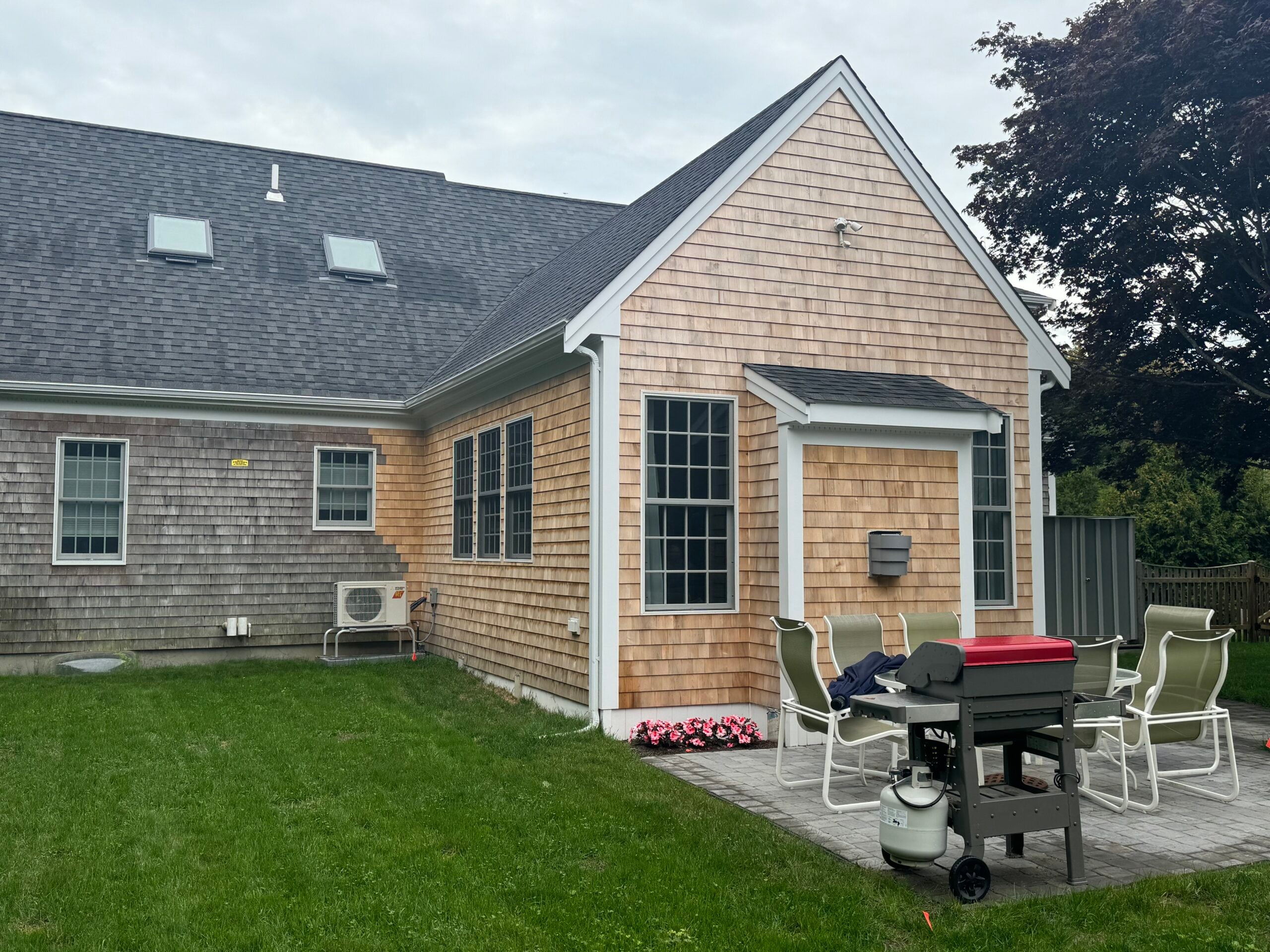
Cedar shingle siding is built for this place, but it still needs a regular look. South and west elevations usually weather fastest. Shaded north elevations hold moisture longer. Salt air and wind-driven rain work on both.
Look for curled shingles, popped nails, cracked corner boards, dark mildew, and soft trim near the bottom of walls. Pay special attention around window sills, door thresholds, deck ledgers, and hose bibs. Those are the areas where small gaps let water behind otherwise sound siding.
If the house has painted trim, summer is the right time to catch open joints and peeling before fall moisture gets in. If the paint is failing across wide areas or the cedar is cupping in sections, that is no longer a touch-up item. It may be time to price a larger exterior repair or talk through painting and exterior care before the season turns.
The short version for cedar shingle siding maintenance is simple: do not power-wash aggressively, do not ignore popped fasteners, and do not let trim gaps stay open through another winter.
Walk the patio, deck, and outdoor living areas
Outdoor living takes a beating here. Sandy soils move, freeze-thaw cycles lift shallow bases, and salt air is hard on fasteners, fixtures, and railings.
Check patios and walkways for heaving, loose stones, pooling water, and settlement near the foundation. If you are comparing Cape Cod patio companies for a new patio or repair, ask less about the top surface and more about the base, drainage, edge restraint, and who will still answer the phone after a winter or two.
For decks and porches, check:
- Ledger board flashing
- Soft deck boards
- Loose railings
- Rusted fasteners
- Stair movement
- Posts sitting too close to grade
- Insect activity around shaded framing
A deck board swap is maintenance. A failing ledger is a structural issue. That distinction matters, and it is why builder-grade eyes are different from a quick cosmetic pass.
If the outdoor space is becoming part of a larger project, connect it early to the rest of the plan. Patios, decks, screened porches, and three-season rooms often tie into home additions, drainage, kitchen access, and future landscaping. Planning them separately can create awkward transitions later.
Test the systems that get ignored during summer
Summer is also when heating equipment, insulation problems, and air leaks get ignored. Nobody wants to think about cold weather in July, but this is when there is still time to fix things before the trades are booked solid.
Run through the basics:
- Change HVAC filters
- Test bath fans and kitchen ventilation
- Look for condensation around ducts, pipes, and basement walls
- Check attic ventilation
- Confirm sump pumps work before storm season
- Inspect weatherstripping around exterior doors
- Look for daylight, drafts, or insect paths around penetrations
For owners thinking about bigger work, this is where the energy conversation starts. A blower door test can show how much air the house is losing and where. For a new custom home, a major renovation, or a modern Cape Cod house update, working with a high performance home builder is not just about insulation values. It is about air sealing, ventilation, moisture control, and making sure the house stays comfortable without trapping problems inside the walls.
That matters more on the Cape because humidity, coastal wind, and seasonal occupancy can punish assemblies that look fine on paper.
Look for the line between maintenance and general contracting
Some items belong on a homeowner checklist. Others belong with Cape Cod general contractors because they involve structure, permits, electrical, plumbing, or multiple trades.
Call it maintenance when the scope is narrow: a few shingles, a trim patch, a loose rail, a gutter correction, a small paint repair.
Call it construction when the work touches framing, foundations, drainage systems, living space, kitchens, baths, additions, structural decks, or exterior changes in regulated areas. That is especially true in Dennis, Yarmouth, Barnstable, Brewster, Orleans, Sandwich, Chatham, and other towns where historic district, Old King's Highway, conservation, flood zone, or Title 5 septic issues can shape the work before a tool comes out.
The mistake is waiting until September to discover that a "small repair" actually needs design, pricing, permits, and a slot on a builder's calendar.
Use summer to plan fall and winter work
If you are thinking about fall renovation Cape Cod projects, use summer for decisions, not just repairs. By the time Labor Day passes, Cape Cod contractor availability tightens quickly. Winter interior work gets planned months ahead, and custom homes or additions need a longer runway.
Good summer planning questions:
- Is this just maintenance, or are we changing how the house lives?
- Do we need design help before we can price it?
- Are we debating architect vs builder, or is a design-build path enough for this scope?
- Will a permit, conservation filing, or septic review be involved?
- Are there photos, measurements, or product decisions we can gather now?
- Is this a project to book for fall, winter, or next spring?
For new construction on Cape Cod, the summer conversation often becomes a fall design phase and a winter or spring permitting track. For a Cape Cod house addition, the earlier you clarify the scope, the better chance you have of avoiding a rushed design and a calendar crunch.
For broader planning questions, the site's FAQ covers common timing, cost, warranty, and renovation questions. Use that as a starting point, then confirm the details with a site visit before you book renovation Cape Cod work for fall or winter.
A quick checklist for second-home owners
If you are not on Cape full-time, make the checklist tighter:
- Exterior walk-around after major storms
- Interior moisture check around windows, ceilings, and basement corners
- HVAC and dehumidifier check
- Gutter and drainage check
- Outdoor furniture and grill safety check
- Irrigation and hose bib inspection
- Photo report before and after heavy weather
- Vendor coordination before small issues sit for weeks
This is where property management earns its keep. A good home watch visit is not just "the house is still standing." It is a builder's look at what changed since the last visit and what should be handled before it becomes expensive.
When to call Custom Crafted Homes
If the checklist turns up a loose board or a clogged gutter, handle it. If it turns up water movement, rot, structural deck issues, drainage problems, or a project that is starting to look bigger than a maintenance visit, bring in someone who builds on the Cape every day.
Custom Crafted Homes is family-owned since 1974, with second-generation builders and a third-generation Cape Cod family. From our Dennis shop, we handle maintenance, repairs, patio construction, general contracting, home additions, and custom homes across all 15 Cape Cod towns and their 50+ villages.
Tell us what you are seeing. We will respond within one business day, look at the house, and give you an honest read on whether it is maintenance, repair, or the start of a larger project. Call (508) 619-7909 or send us a message.