Maintaining Cedar Shingle Siding on Cape Cod
Cedar shingle siding maintenance on Cape Cod is less about hard work and more about timing. Drive any stretch of 6A and you’ll see them: weathered cedar shingles silvered to that particular Cape gray that no paint job can fake. They’ve been the default siding here for a reason. Done right, cedar shingle siding maintenance is mostly about leaving things alone and knowing what to watch for. Done wrong, you end up with rot behind the shingles or a wall that needs a full re-side ten years early.
This is the practical version of how to keep cedar shingles looking good and lasting on a Cape Cod house.
Why cedar is everywhere on the Cape
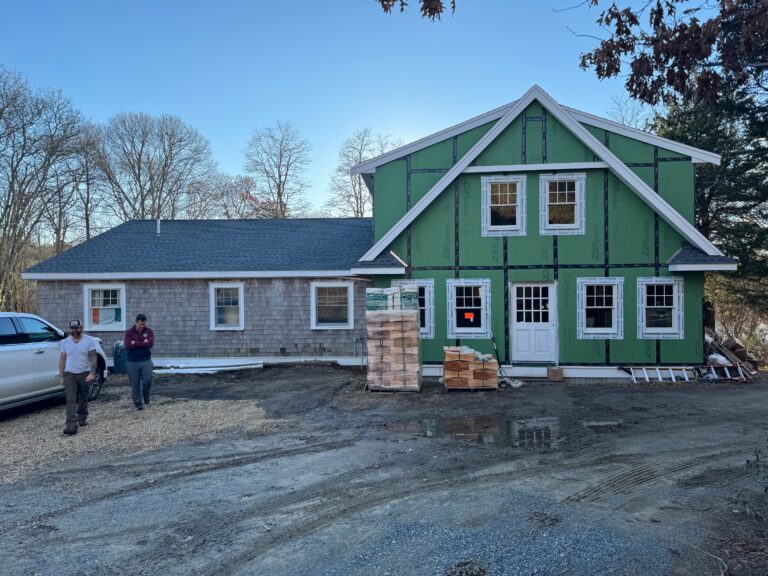
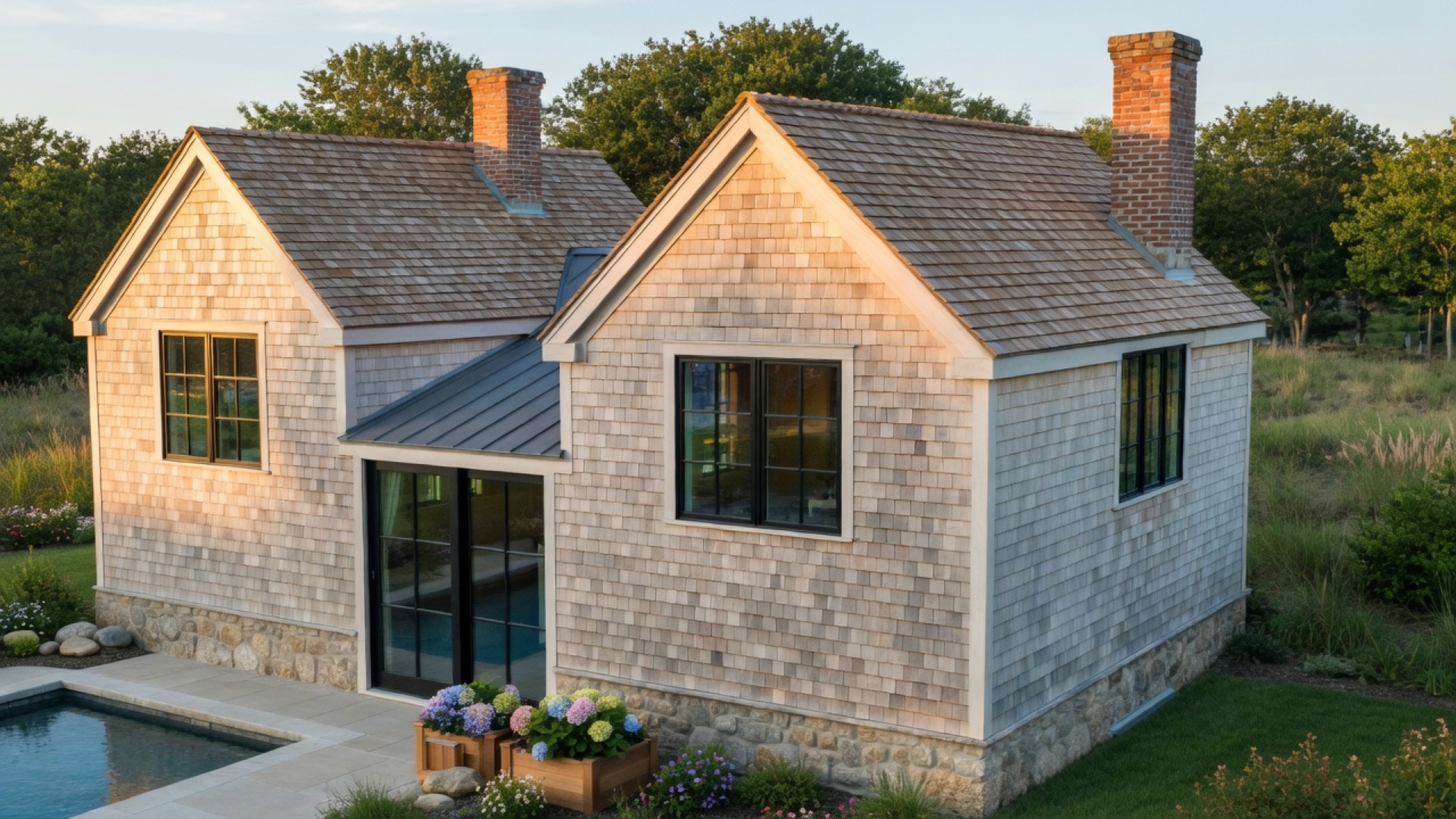
Cedar shingles and cedar shake siding have clad Cape Cod houses for centuries. The wood handles humidity, breathes well, and weathers into a silver-gray patina that’s become the visual signature of the region. Compared to painted clapboard, the maintenance baseline is lower — you’re not on a five-to-seven-year repaint cycle, and small repairs are usually a single-shingle swap rather than a section job.
The tradeoff is that cedar is a natural material exposed to the worst weather in New England. It moves, it absorbs water, and it has a finite life. Knowing what’s normal weathering and what’s a problem is most of the job.
What salt air and Cape weather actually do to cedar
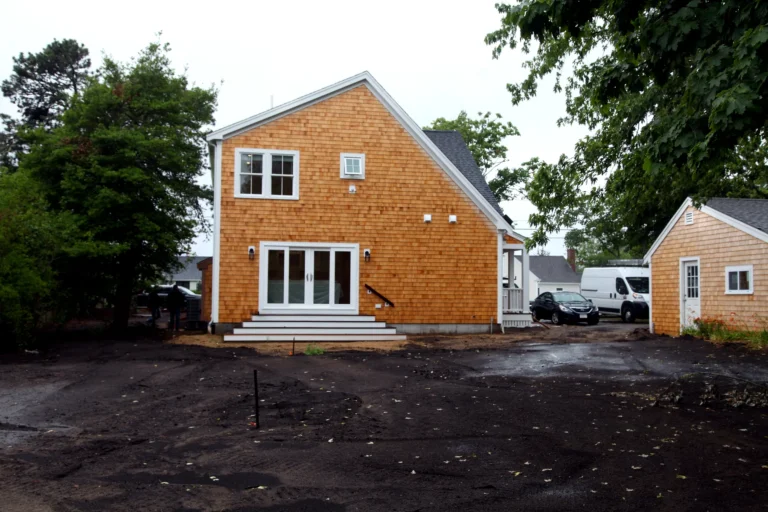
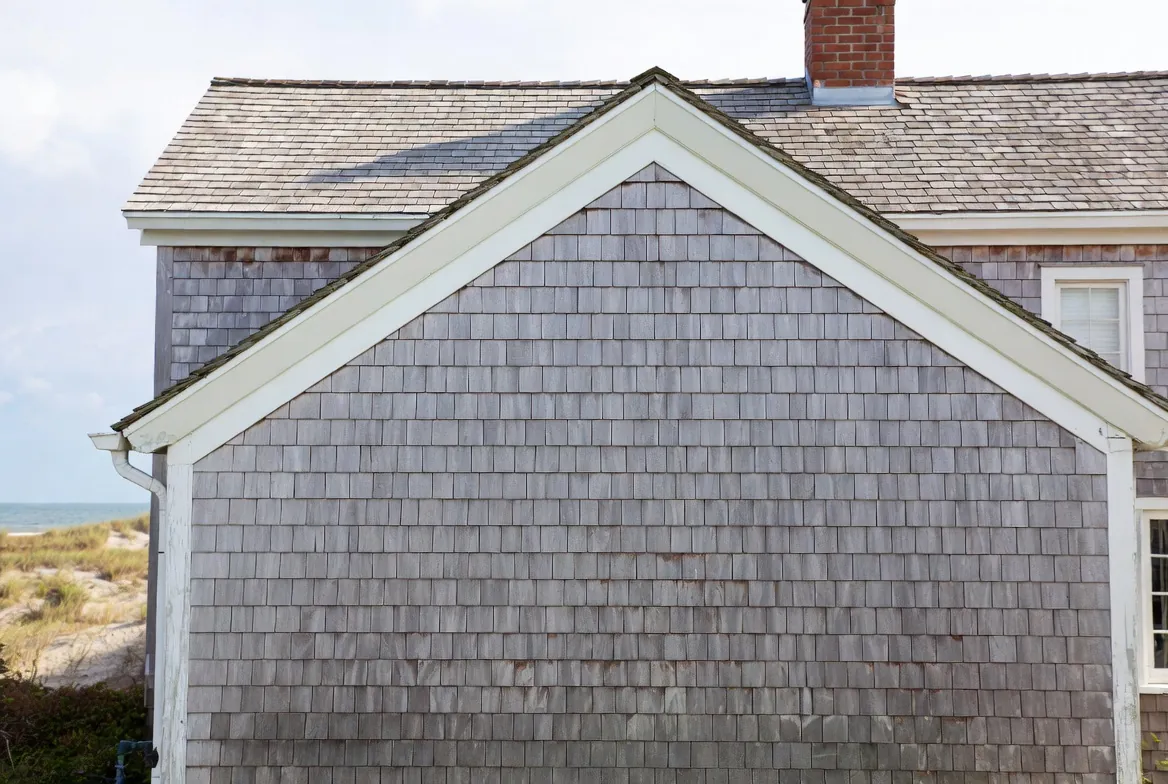
Salt air accelerates weathering on the exposures that get the most sun — typically south and southwest walls. Those walls turn silver-gray first, sometimes within a year or two of installation, while north and east elevations can stay tan or honey-colored for much longer. That uneven aging is normal. It’s not a defect.
Mildew is the other constant. It shows up as black or dark-gray blotching, usually on the shaded sides where moisture lingers. Weathered cedar shingles with mildew look worse than they are — it’s a surface issue, not rot.
Freeze-thaw cycles are the real structural enemy. Water gets behind a curled or popped shingle, freezes, expands, and pries things apart. A bad nor’easter that drives rain horizontally for two days can push water into places it has no business being. After every major storm, walk the perimeter.
Your annual cedar shingle siding maintenance routine
Spring is the natural window. Winter exposure shows you everything that’s wrong, and you have months of dry weather ahead to fix it. The short checklist:
- Curled, cupped, or split shingles — most common on south-facing walls
- Popped nails — back them out and replace with stainless ring-shank, don’t pound them back in
- Mildew bloom — note the pattern; heavy mildew low on a wall can indicate splash-back from ground or roof
- Soft spots near the foundation, around windows, behind downspouts — probe gently with a screwdriver
- Gaps at trim, corners, and flashing — caulk failure is how water gets in behind sound shingles
After any storm with sustained winds over 50 mph, do a quick walk-around for blown-off shingles. Replacing one shingle the week it pops is a ten-minute job. Letting it ride until you notice water staining inside is a much bigger one.
Cedar shingle siding maintenance: treatment options and tradeoffs
There’s no single right answer — it depends on the look you want and how much upkeep you’re willing to sign up for.
- Leave natural — silver-gray patina, most authentic Cape look, lowest maintenance.
- Penetrating oil treatments — extend shingle life and delay graying. Reapply every two to three years on exposed elevations.
- Semi-transparent stains — tint toward a specific color while still showing grain. Reapply every three to five years.
- Solid stains — opaque coverage for heavily weathered shingles you don’t want to replace. Reapply every five to seven years.
- Paint — generally not recommended on shingles. Paint traps moisture against the wood, and once it starts peeling, the fix is ugly and expensive.
If you’re starting from new construction, let the cedar weather for at least six months — ideally a full year — before applying any treatment. Sealing too soon traps mill glaze and gives you adhesion problems down the line.
Repair, replace, or re-side
Individual shingle replacement is straightforward: pull the bad one, slide a replacement in, fasten with stainless steel (never galvanized in coastal exposure — galvanized will rust and stain your wall within a few years).
A wall section with widespread cupping, multiple soft spots, or rot at the bottom course is a section-replacement conversation. Re-shingle from the failure line down.
Full re-side is the call when you’re seeing systemic failure — popped nails everywhere, rot in multiple bays, or the original install used the wrong fastener. On a well-maintained Cape house, cedar shingle siding can last forty to fifty years; on a neglected one, fifteen.
Common cedar shingle siding maintenance mistakes
Power-washing is the biggest one. Aggressive pressure drives water behind the shingles and can blow out the weave between courses. If you’re cleaning, use the lowest pressure that does the job, work bottom-up, and rinse top-down. A soft brush and a diluted oxygen-bleach solution does more good than a 3000-psi wand.
Other common ones: ignoring small rot spots until they spread to the sheathing; sealing new shingles before they’ve weathered; using painter’s caulk instead of a high-grade exterior sealant at trim joints; mixing galvanized fasteners into a coastal install.
Cedar shingle siding maintenance: when to call someone
A lot of cedar maintenance is genuinely DIY. Annual inspection, single-shingle swaps, gentle cleaning, even oil reapplication on a one-story house — homeowners handle that all the time.
Where a builder or experienced exterior crew earns their fee is on the bigger work: section replacements, full re-sides, large-area staining, and rot remediation behind the shingles. If you’re a second-home owner who isn’t on the Cape year-round, property management for seasonal inspection and storm-response checks is worth pricing out — small problems caught in October don’t become big problems by May.
Custom Crafted Homes has been working on Cape Cod houses for over fifty years — two generations of builders, three generations on Cape Cod, serving all 15 Cape Cod towns. If your shingles need more than a homeowner pass, our team handles exterior siding care and re-side projects. Give us a call at (508) 619-7909 or reach out and we’ll come take a look within a business day or two.
For manufacturer-grade care specs, the Cedar Shake & Shingle Bureau publishes maintenance guidance.